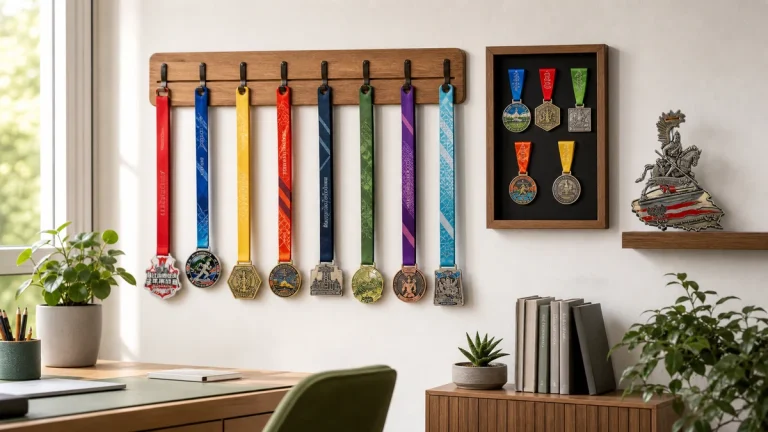
Custom medal design trends for 2026 show that medals are no longer treated as a simple finishing reward. For marathons, school competitions, corporate events, charity races and brand campaigns, the medal is often the item people photograph, keep and remember. That is why 2026 medal design is moving toward pieces that feel more personal, more tactile and more connected to the story behind the event.
After reviewing current industry discussions and top-ranking search results for custom medal trends, several themes appear again and again: sustainability, deeper 3D details, interactive construction, meaningful shapes, premium finishes and stronger personalization. Here is how event organizers and buyers can use those trends when planning their next custom medals.
1. Story-Driven Medals Are Replacing Generic Designs
The strongest trend is not just a color or finish. It is the shift from generic medals to story-driven designs. A medal should communicate what the event represents: the city, the route, the team, the achievement, the anniversary or the cause.
For a race medal, that might mean using a skyline, route map, landmark, mascot or finisher message. For corporate awards, it may include the company milestone, brand symbol, year and recognition level. For schools and clubs, a clear emblem and date can make the award feel official and memorable.
2. 3D Relief and Layered Texture Add Premium Value
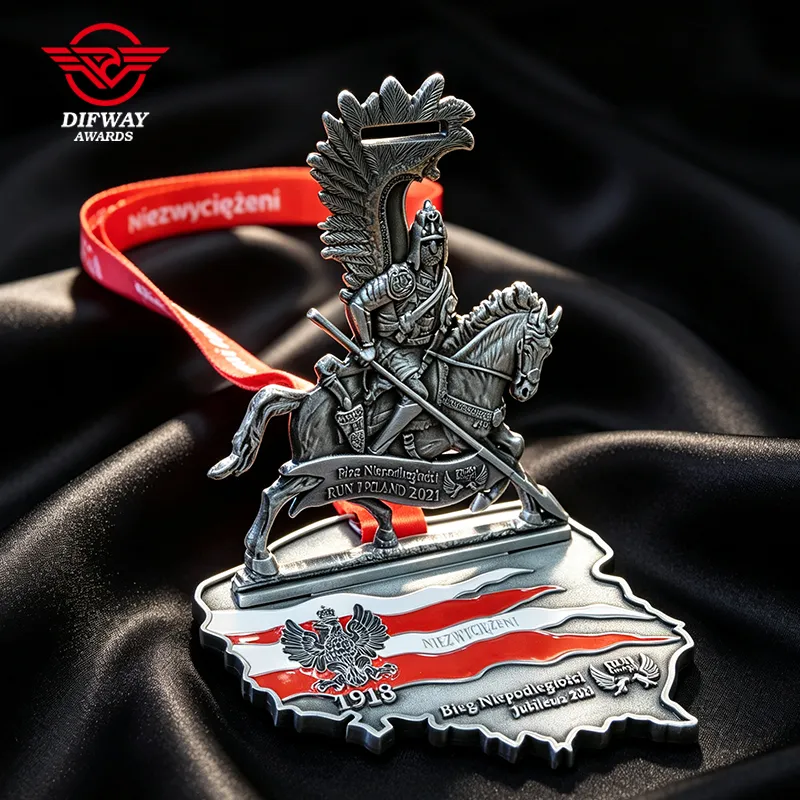
Flat medals still work for simple budgets, but more buyers are asking for depth. 3D relief, raised metal lines, recessed backgrounds, sculpted mascots and layered surfaces make a medal feel substantial in the hand.
This is especially useful when the design includes people, animals, buildings, vehicles or sports movement. Deep relief can make those details more lifelike, while antique plating or matte backgrounds help the raised details stand out.
3. Custom Shapes Are Becoming the New Standard
Round medals are classic, but custom-shaped medals are becoming more common because they make the award instantly recognizable. A custom outline can follow a logo, shield, map, running route, mascot, product shape or themed symbol.
For example, a Halloween race can use a pumpkin outline, a cycling event can use a bicycle silhouette, and a corporate anniversary can use a badge or emblem shape. The key is to keep the outline readable.
4. Sustainable Choices Matter More to Buyers
Eco-conscious planning is now part of many event and procurement decisions. Buyers are paying closer attention to materials, packaging, shipping efficiency and whether a product feels wasteful after the event.
For medals, this can include recyclable metal, durable designs that recipients will keep, right-sized packaging, and production planning that avoids rush waste. The most practical approach is to design a medal people genuinely want to save.
5. Interactive Medals Create Shareable Moments
Interactive medal designs are popular because they give recipients something to discover. Spinner medals, sliding parts, detachable pieces, puzzle medal series and glow-in-the-dark details can all make the award more exciting.
These features work best when they support the event concept. A spinner can represent wheels, time, movement or a rotating logo. A puzzle medal series can encourage participants to join multiple races.
6. Finish Selection Is Becoming More Strategic
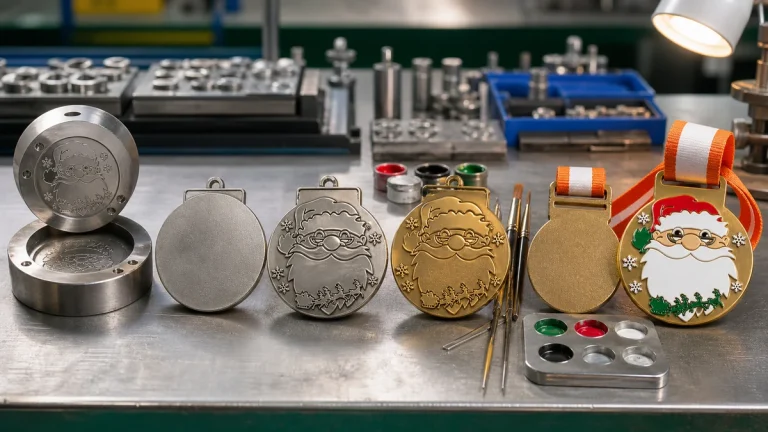
The metal finish changes the entire personality of a medal. Shiny gold feels celebratory, antique bronze feels classic, matte black feels modern, and dual plating can make special details stand out.
For premium designs, consider combining finishes with texture: polished raised details against a sandblasted background, antique plating with recessed enamel, or selective color on a sculpted metal base.
7. Personalization Goes Beyond Adding a Logo
Personalization in 2026 is about making the medal feel specific to the recipient or event. Names, dates, finisher distances, category levels, QR codes, ribbon printing and custom packaging can all make the award feel more complete.
For event organizers, the best personalization usually happens in layers. The medal carries the main event identity, the ribbon adds sponsor or distance information, and the packaging or card explains the story.
8. Collectible Award Products Are Growing Together
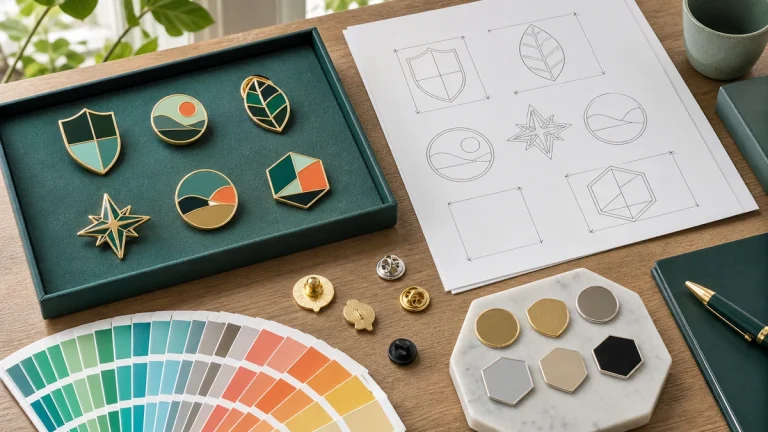
Medals are often part of a wider recognition system. Many organizations now combine medals with custom lapel pins, custom challenge coins, keychains or display boxes to create a complete event collection.
This is useful for race series, corporate recognition programs, school events and brand campaigns. When the products share the same colors and visual style, the whole program feels more professional.
How to Plan a Better Custom Medal in 2026
- Define the medal purpose: finisher, winner, commemorative, corporate or promotional.
- Choose the main visual story: logo, landmark, mascot, route, date or theme.
- Decide whether the design should be flat, 2D relief or 3D sculpted.
- Select a finish that supports readability and brand style.
- Plan ribbon, packaging and personalization at the same time as the medal.
- Confirm artwork, size, thickness and production timeline before placing the final order.
Final Thoughts
The best custom medals in 2026 will not be the most complicated ones. They will be the ones that feel intentional. A strong medal tells a clear story, feels good in the hand, photographs well and gives recipients a reason to keep it.
If you are planning medals for an upcoming race, corporate event, school competition or commemorative program, Difway Awards can help with artwork review, material selection and production guidance. Browse our custom award products or contact us to discuss your next project.